River Street Savannah is the part of the city most visitors see first and remember longest. It is a mile of cobblestone waterfront lined with brick cotton warehouses that now hold shops, bars and restaurants, and the big cargo ships glide past at the end of the block. It is touristy, loud on weekends and a little bumpy underfoot. It is also one of the best places in Savannah to understand why the city exists.
This guide covers what to do on River Street, how to get down to it from the squares, where to park, and how to avoid the common mistakes: wrong shoes, wrong time of day and underestimating the length.
What River Street actually is
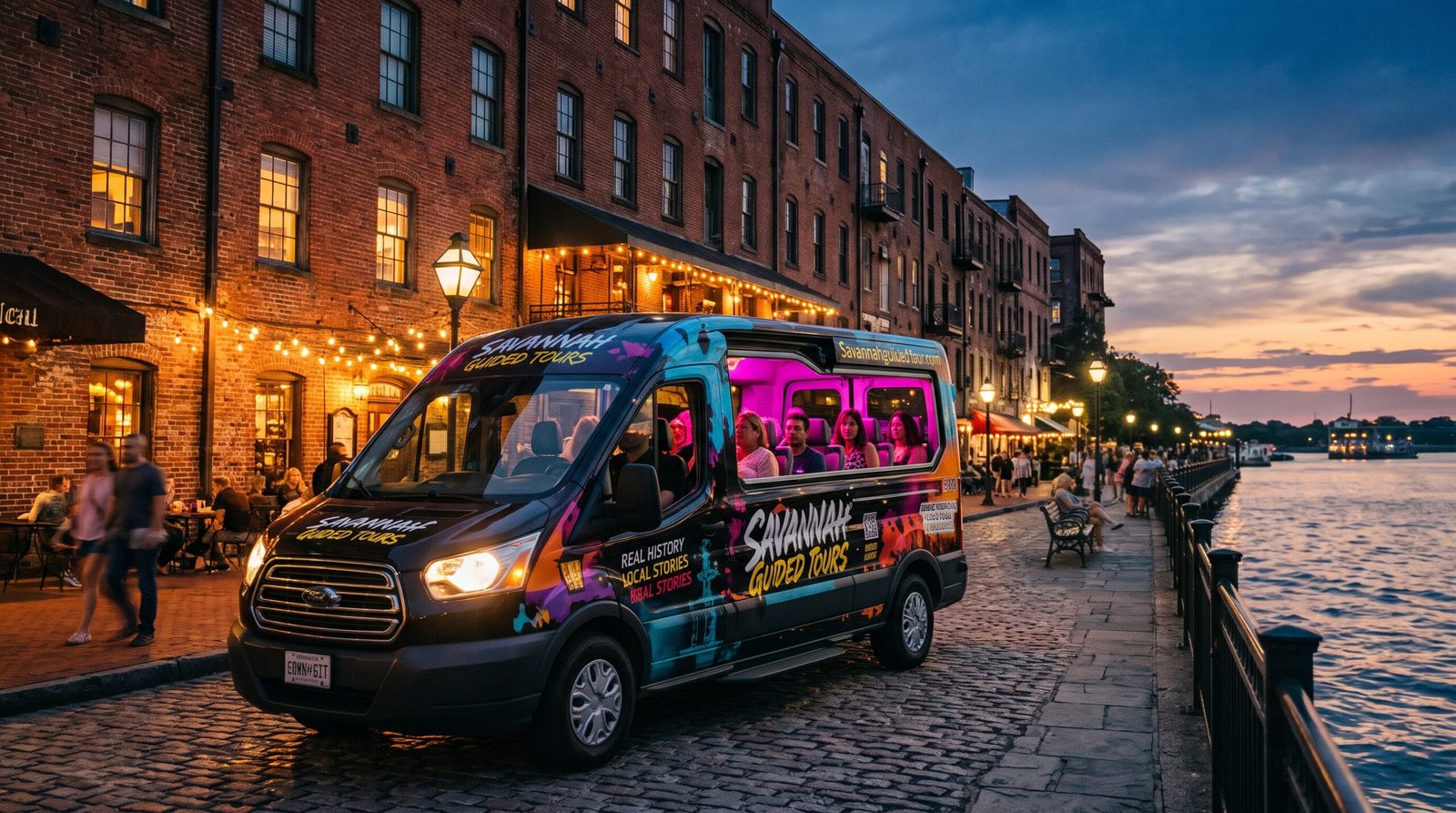
River Street runs along the Savannah River below the bluff where James Oglethorpe landed in 1733. For most of the 19th century this was the working edge of the city, where cotton was weighed, sold and loaded onto ships. The brick warehouses you see today were built for that trade, and the buildings above them face Bay Street on the other side.
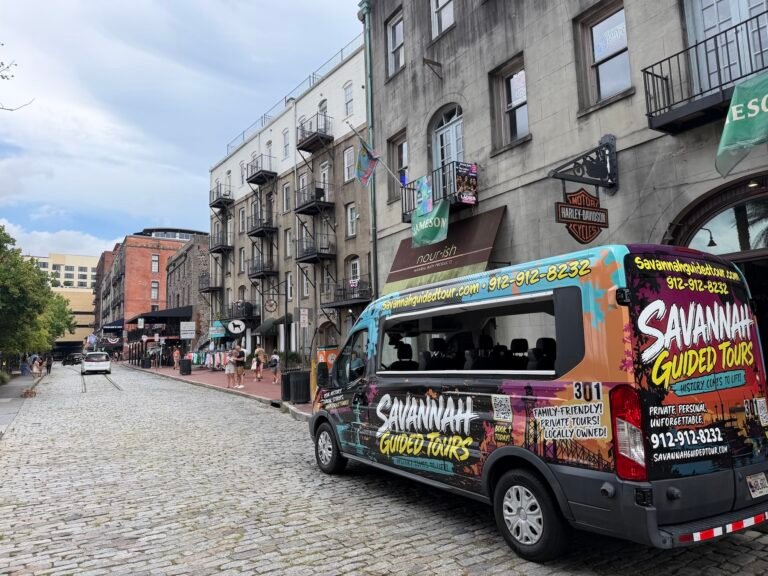
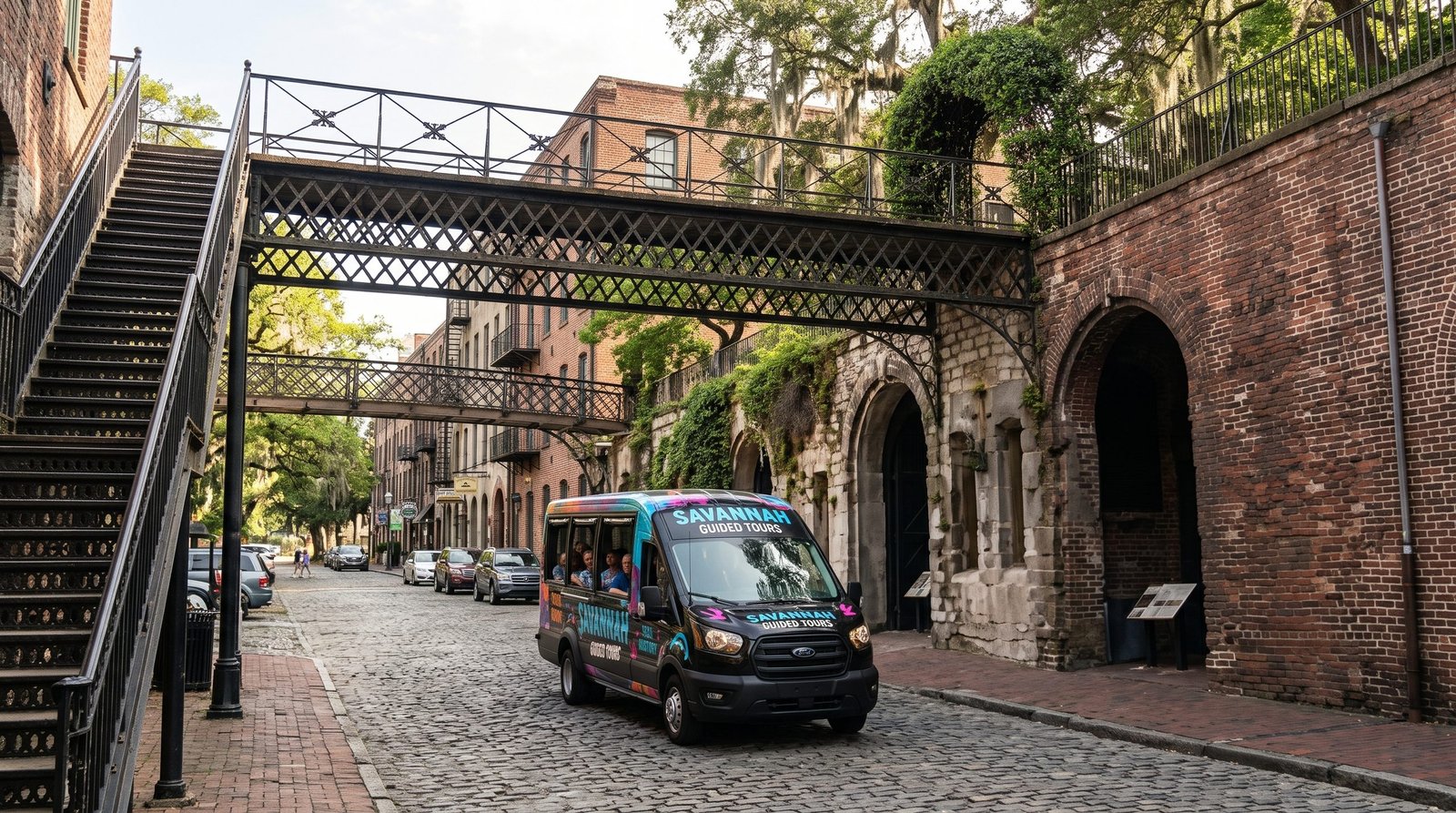
The stretch between River Street and Bay Street is called Factors Walk, named for the cotton factors who ran the business. Iron bridges and stairways connect the two levels, and the ironwork is some of the best in the city. The cobblestones under your feet came from ships, which carried stone as ballast on the trip across the Atlantic and left it behind when they loaded cotton.
Today the waterfront is a mix of historic and modern. The Savannah River is still a working port, so the ships passing by are real container and cargo vessels, not props. At the western end of the street, Plant Riverside District adds a hotel, shops and a Christmas market in winter.
Things to do on River Street
Walk the cobblestones and Factors Walk
The simplest plan is the best one. Walk one end to the other, then climb a stairway to Factors Walk and look down at the street. The brick arches, iron bridges and old warehouse doors make for good photos at any time of day. Wear flat shoes with grip. The stones are uneven and can be slick after rain, and heels are a bad idea.
Watch the ships
Container ships and tankers pass the waterfront at close range, and they look enormous from the street. Find a bench or a spot along the railing and wait. Ship traffic varies by day, so there is no fixed schedule to rely on. If one comes by, you will feel it before you see it.
Find the Waving Girl statue
A bronze statue of Florence Martus, known as the Waving Girl, stands at the eastern end of the waterfront. According to local legend, she waved at every passing ship for more than 40 years. The story is probably more romantic than accurate, but it is part of the city’s folklore, and the statue is a good place for a photo.
Eat something sweet
River Street is known for pralines, saltwater taffy and ice cream, and you will smell the sugar from half a block away. Many of the candy shops let you sample before you buy. A box of pralines is the most popular souvenir for a reason.
Ride the free ferry
The Savannah Belles Ferry crosses the river between the waterfront and Hutchinson Island and costs nothing. The ride takes only a few minutes each way, and it gives you a view of the skyline and the ships that you cannot get from the street. Check the Chatham Area Transit site for current hours.
Shop and browse
Souvenir shops, art galleries and clothing stores fill the warehouses. Most are aimed at tourists, so prices are not low, but they are fun for browsing. The best finds are usually the local-artist shops and the older bookstores.
Time it with an event
River Street hosts festivals and concerts throughout the year, and the street fills with crowds on those days. Check the Savannah’s Waterfront events calendar before you go. If you want quiet, avoid weekend evenings and festival days.
Where to eat on River Street
River Street has a large number of restaurants, from casual seafood to sit-down Southern food, and most have outdoor seating with a river view. A few tips apply across the board:
- Reserve for dinner. Weekend tables fill up, especially in spring and fall.
- Look at the menu before you commit. Quality varies, and a table with a river view is not always a good meal.
- Order the Lowcountry classics. Shrimp and grits, she-crab soup, fried green tomatoes and Savannah red rice are on most menus.
- Try a side street. Some of the better restaurants are one block back from the water, on Bay Street or the lanes between.
For a longer list of places near the squares, see our guide to where to eat in Savannah’s Historic District.
How to get to River Street
On foot from the squares
River Street sits at the bottom of the bluff, so you walk down. Most visitors come down stairways or ramps from Bay Street and the squares. There are several, and the walk from Johnson Square takes about five minutes. The stairs are steep and worn, and some have no handrail, so take care.
If you have a stroller, walker or wheelchair, use one of the ramps instead of the stairs. The ramps slope down to the cobblestones and can be steep, so plan for help if needed. Our guide to Savannah tours for seniors covers accessibility in more detail.
By car
Parking near River Street is not easy. Metered spaces on the street fill quickly, and the garages on and near Bay Street are your best bet. Rates and hours change, so check signs before you leave your car. Our Historic District parking guide explains where the garages are and how to avoid tickets.
By ferry or shuttle
If you are staying on Hutchinson Island, the Savannah Belles Ferry drops you right on the waterfront. Chatham Area Transit also runs a free shuttle that loops through downtown, with stops near River Street. Check the current route before you rely on it.
The cobblestone problem
Cobblestones are charming for photos and miserable for some feet. A few ways to deal with them:
- Wear sturdy flat shoes. Sneakers, boots or flat sandals with straps work. Avoid heels, flip-flops and thin soles.
- Go slowly in the rain. The stones are slick when wet.
- Mind the wheels. Strollers and wheelchairs bounce along the stones and are best used on the smoother walkways.
- Skip it if you have limited mobility. You can still see the waterfront from a vehicle. Our open-air tour rolls along River Street on the cobblestones for a short stretch, which is bumpy, but you stay seated.
Best time to visit River Street
- Morning: Quiet and good for photos. The shops open late, but the street is calm and the light is soft.
- Afternoon: Busy and hot in summer, with cruise and tour-bus crowds. Good for shopping and a long lunch.
- Evening: The most atmospheric time, with lights on and music from the bars. Also the loudest, especially on weekends.
If you only have an hour, go late in the afternoon when the heat fades and the light is warm. For the quietest visit, go on a weekday morning.
River Street and the guided tour
River Street is one of the highlights of our tour route. After the Cathedral Basilica and Reynolds Square, the tour drops down to the riverfront, rolls along the cobblestones past Factors Walk and continues to City Hall and City Market. Your guide explains how the cotton trade worked and why the street looks the way it does. Most guests walk back to River Street afterward to shop and eat, now that they know where they are.
If you are choosing between riding and walking the Historic District, our post on whether to walk or ride can help.

Frequently asked questions
See River Street the easy way
Our 75-minute open-air tour takes you down to the riverfront, along the cobblestones and past Factors Walk, with a guide explaining each stop. Book the Savannah Historic District open-air tour and then come back on foot for lunch.