25 Free Things to Do in Savannah, GA
Savannah is one of the few cities in America where the best sights don’t have a ticket booth. The squares, the live oaks, the cemeteries, the riverfront and the architecture are all out in the open, and most of them are free.
That makes Savannah on a budget easy. We’ve put together 25 free things to do in Savannah, picked by the guides who work these streets every day. Some are the famous sights to see in Savannah; some are places visitors walk straight past. At the end there’s a short list of cheap things worth paying for, and a few tips for keeping costs down.
Quick answer: The best free things to do in Savannah are walking the Historic District squares, Forsyth Park and its fountain, River Street, Bonaventure and Colonial Park cemeteries, the free Savannah Belles Ferry, the Cathedral Basilica of St. John the Baptist, the Saturday farmers’ market in Forsyth Park, and the free geode and dinosaur exhibit at Plant Riverside.
Squares, parks and streets
1. Walk the squares of the Historic District
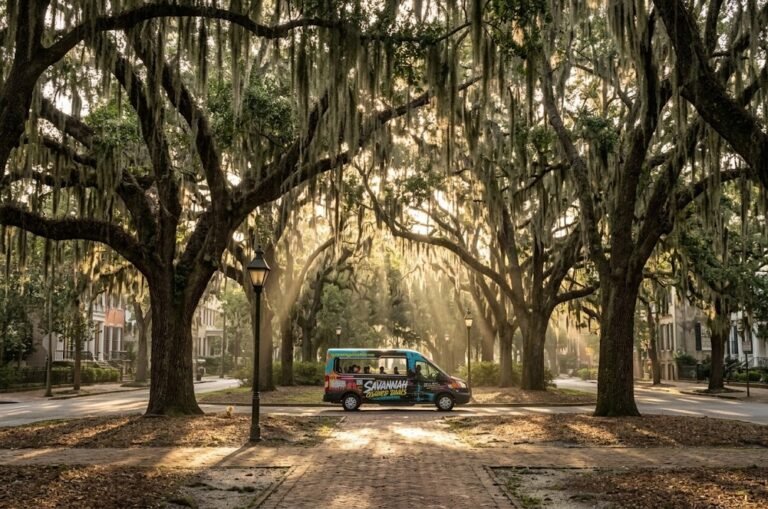
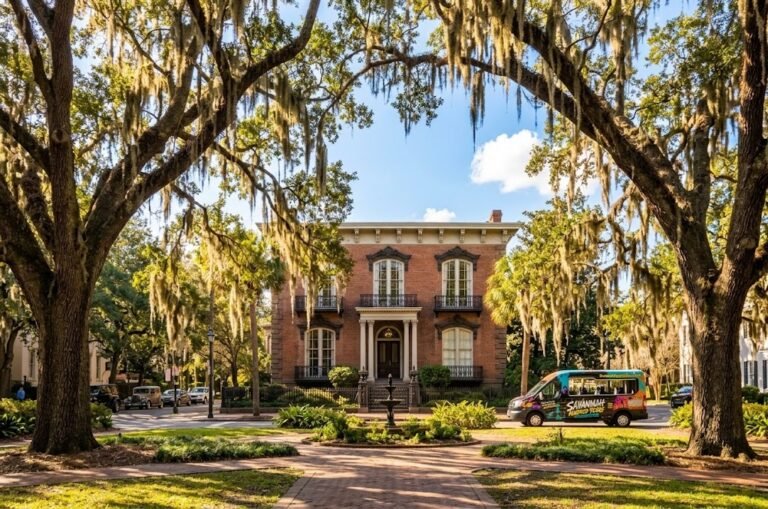
Savannah was laid out in 1733 as a grid of wards, each built around a public square. Twenty-two squares survive, and they’re the main reason people fall for the city. Each has its own monument, trees and character. Johnson Square is the oldest; Monterey is often called the prettiest. Walking Bull Street from Johnson Square south to Monterey takes in five of them in a little over a mile.
2. Forsyth Park and the fountain
Thirty acres of lawns and oaks at the southern end of the Historic District, with the white cast-iron fountain that’s on half the postcards in Savannah. Bring a coffee and sit in the shade. Our Forsyth Park guide covers the best photo spots.
3. Forsyth Farmers’ Market
Every Saturday, year round, from 9:00 AM to 1:00 PM, local farmers and food makers set up at the south end of Forsyth Park, at Bull Street and Park Avenue. Browsing is free, the people-watching is excellent, and it’s the easiest way to see how locals spend a Saturday morning.
4. Chippewa Square and the Forrest Gump spot
The opening of Forrest Gump was filmed on the north side of Chippewa Square. The bench is long gone, but the square is still worth seeing for the Oglethorpe statue and the historic Savannah Theatre. Read our guide to where the Forrest Gump bench is now.
5. Monterey Square and the Mercer-Williams House
The square made famous by Midnight in the Garden of Good and Evil. The Mercer-Williams House charges for tours, but looking at it from the square costs nothing, and that’s where the best view is anyway.
6. Jones Street
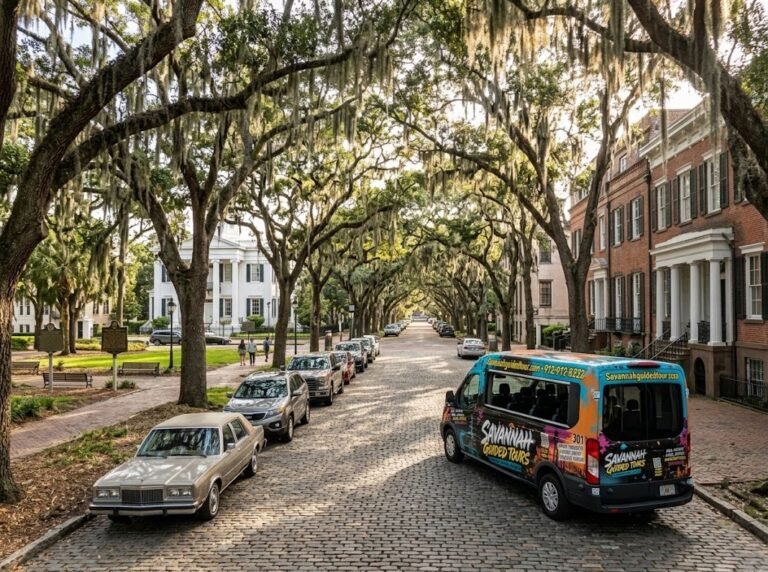
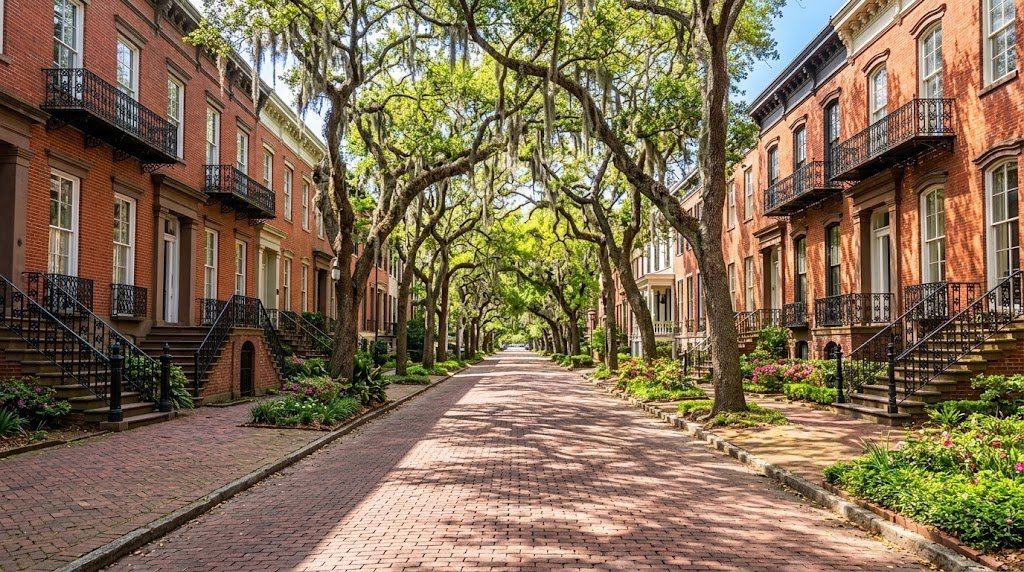
A block west of Monterey Square, Jones Street is lined with brick townhouses, iron stair rails and oaks that meet overhead. It’s often called one of the prettiest streets in America. Walk it slowly, and respect that people live here.
7. Ellis Square
Next to City Market, with a life-size statue of songwriter Johnny Mercer, a giant chess board and a ground-level fountain that turns into a splash pad in warm weather. If you have kids, see our guide to things to do in Savannah with kids.
8. The Candler Oak
On Drayton Street between Gaston and Huntingdon streets, near Forsyth Park, stands a live oak estimated to be several hundred years old. In 1984 it became the first single tree in the country protected by its own conservation easement. Its limbs spread wider than the tree is tall.
The riverfront
9. River Street and the riverwalk
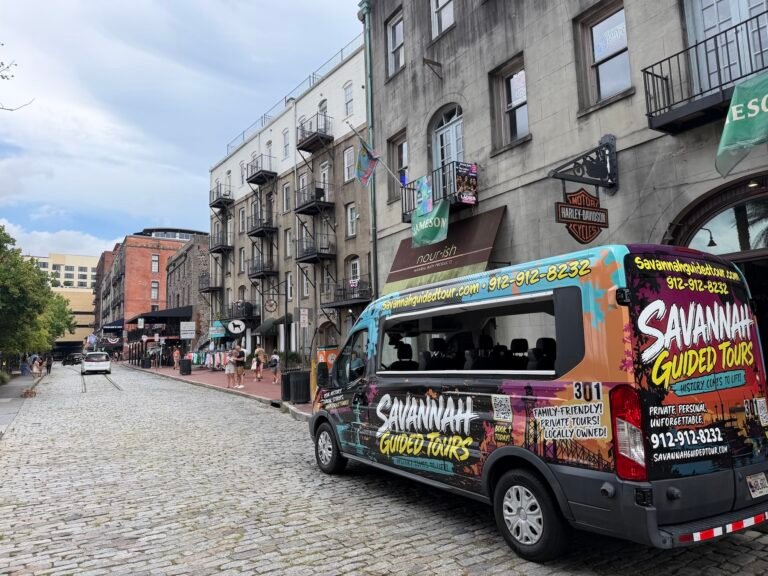
A mile of cobblestones, old cotton warehouses and the Savannah River. The shops and restaurants cost money; walking the riverwalk doesn’t. Go in the evening, when it’s cooler and the light is better.
10. Watch the container ships
The Port of Savannah is one of the busiest container ports in the country, and the ships pass surprisingly close to River Street on their way upriver. Stand at the rail when one goes by and you’ll understand why it’s a local pastime.
11. The Waving Girl statue
At the east end of River Street, in Morrell Park, a statue honors Florence Martus, who waved to every ship entering and leaving the port for more than 40 years around the turn of the 20th century. It’s a sweet story and a good photo.
12. Factors Walk
The multi-level passages and iron bridges between Bay Street and River Street were built for the cotton trade. The old stone stairs are steep, but the views down through the ironwork are one of the most photogenic sights in Savannah.
13. Ride the Savannah Belles Ferry
The free public ferry runs between River Street and Hutchinson Island. It’s short, it’s free, and the view of the skyline from the middle of the river is the best in town. Boats leave from near City Hall and from Waving Girl Landing.
14. Plant Riverside’s geodes and chrome dinosaurs
In the lobby of the JW Marriott at Plant Riverside District, at the west end of the riverfront, you’ll find a free display of huge geodes and minerals and life-size chrome dinosaurs. It’s air-conditioned, which in July counts for a lot.
Cemeteries
15. Colonial Park Cemetery
A few minutes’ walk from the center, this is where Savannah buried its dead from the 1750s until 1853. You’ll find Revolutionary War figures, epidemic victims and a wall of headstones with an odd story behind it. Free during the day.
16. Bonaventure Cemetery
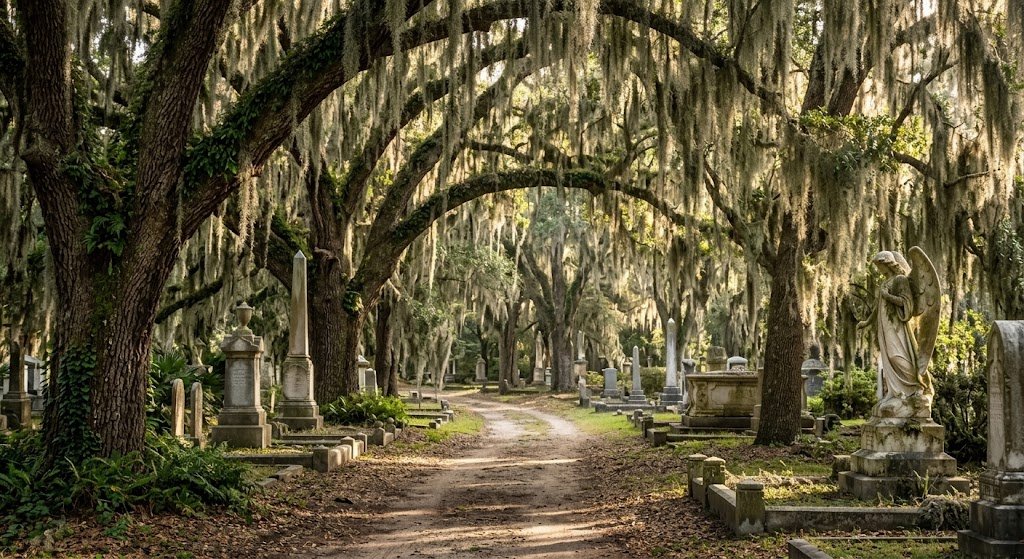
About 15 minutes east of downtown, and one of the most beautiful cemeteries in the country. Avenues of live oaks and Spanish moss, Victorian statues and a bluff over the Wilmington River. Open daily from 8:00 AM to 5:00 PM, and free. Johnny Mercer is buried here.
17. Free Bonaventure tours
The Bonaventure Historical Society runs free guided tours of the cemetery on a set weekend each month. Check their schedule before your trip; the volunteer guides know every story on the grounds.
18. Laurel Grove Cemetery
Quieter and less visited than Bonaventure, Laurel Grove on the west side of the city has fine Victorian monuments and graves of notable Savannahians, including Juliette Gordon Low, founder of the Girl Scouts.
Churches and landmarks
19. The Cathedral Basilica of St. John the Baptist
On Lafayette Square, with the tallest spires in the city, painted ceilings and tall stained-glass windows. Visitors can go inside outside of Mass times. Admission is free, and a small donation is welcome.
20. Christ Church, Independent Presbyterian and Mickve Israel
Christ Church on Johnson Square is home to Georgia’s oldest congregation. Independent Presbyterian Church on Bull Street has one of the finest steeples in the South. Congregation Mickve Israel on Monterey Square is one of the oldest Jewish congregations in the country. All three are worth seeing from the outside, and churches are often open to visitors at set hours.
21. City Market and the art galleries
A four-block pedestrian area around Ellis Square with restaurants, shops and working art studios. Walking around and looking at the galleries is free, and artists are often happy to talk.
22. City Hall and the gold dome
Savannah City Hall on Bay Street, completed in 1906, has a dome covered in real gold leaf. Stand at the top of Bull Street and look straight down the axis of the city from the river to Forsyth Park.
Beyond the Historic District
23. Tybee Island beach
Tybee is about half an hour east of downtown, and the beach itself is free. Parking isn’t, so budget a few dollars an hour. Walk the pier, look for dolphins and see the lighthouse from the outside.
24. Free museum days
A few times a year, Savannah museums open their doors for free. Super Museum Sunday, part of the Savannah Book Festival in February, offers free admission at many local museums. Bank of America and Merrill cardholders can also get free entry to some museums on the first full weekend of each month through the Museums on Us program.
25. The free dot Express Shuttle
Chatham Area Transit’s fare-free downtown shuttle loops through the Historic District, connecting the visitor center, city garages and major sights. It isn’t a tour, but it’s a free way to save your feet between the places on this list. Check CAT’s current schedule before relying on it.
Cheap things to do in Savannah that are worth paying for
Free is great, but a few inexpensive things add a lot to a visit:
| What | Roughly what it costs | Why it’s worth it |
|---|---|---|
| Our 75-minute open-air tour | $25 per person | Covers about ten landmarks with a live guide, so you know where everything on this list is |
| Wormsloe State Historic Site | About $10 per adult | The famous mile-and-a-half avenue of live oaks |
| Savannah History Museum | $12 per adult | The city’s story in the old railway station, plus the Forrest Gump bench |
| Leopold’s Ice Cream | A few dollars | A Savannah tradition for over a century |
| A Visitor Day Pass for parking | $15 per day | Unlimited parking in city garages and most meters |
Tips for Savannah on a budget
- Visit on a Sunday. Street meters aren’t enforced, and most free sights are open. Our parking guide covers the rest.
- Stay south of Liberty Street. Hotels and inns near Forsyth Park can be cheaper than those on the river, and the meters south of Liberty are free on weekends.
- Travel outside peak season. Summer and midwinter usually bring lower hotel rates than spring. See our month-by-month guide.
- Eat lunch as your big meal. Many downtown restaurants have cheaper lunch menus.
- Walk. The Historic District is flat and compact. Between walking, the free shuttle and the ferry, you can skip rideshares entirely.
Planning a longer stay? Our Savannah weekend itinerary mixes free sights with a few paid ones across two or three days.
Frequently asked questions
See the free sights with a guide first
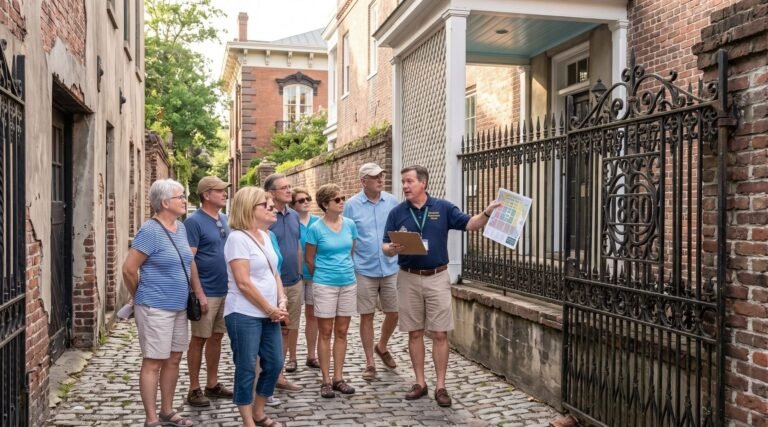
Most of this list is spread across two and a half square miles. Our 75-minute open-air tour covers the big ones in a single loop for $25, so you can spend the rest of your trip going back to your favorites for free.